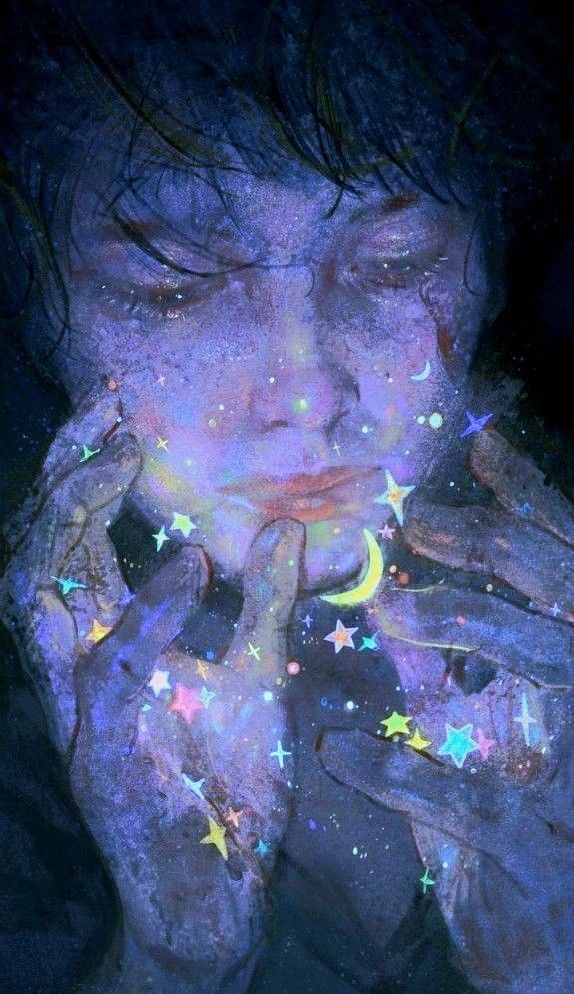
1. The Introduction and Narration
Death is the final destination in life. Dying, however, is not the goal of life but waking up is the goal of life. The universe we live in is not our actual home, neither are our physiques or our bodies. We borrow them for a time, and after death, everything linked with our bodies vanishes. Everyone is in a dream but not the regular dream but a mass share in a virtual universe, and everyone has an original character every time they play the game.
Similar to a persona in a story, everybody has a screenplay that was written before their birth. Some screenplays are lives of riches while others are those of suffering and pain; however, every screenplay has a role, and one does not get to choose their screenplay (VAO Channel). We have a script that we are playing in our life; however, the role we are playing is not the actual story, and the name of our character is not our exact name, neither is our body our actual body, and even our screenplay is not our true destiny.
Everybody is an actor having a role; however, most individuals are cast into roles that do not match them. For instance, some individuals are in physiques of the wrong sex, and they compelled others to be the character they dislike most. The dream system develops its reality from projections just as projectors project information onto a screen. All things are a blend from many projections (VAO Channel). In an instance of a person, their primary form comprises the core, and it shows their dream self on top through layers with things such as their identity, thoughts, physical body, and relations with other actors in their screenplay.
2. Arguments supporting that reality is a dream
First, the waking life and dreams are the same; therefore, dreamers may be deceived to believe that they are having waking experiences, whereas, in reality, they are dreaming. One of the odd things about dreams is that we do not know that we are dreaming most of the time. According to (Fosse et al.,2003), “The activity that takes place in memory systems during sleep is likely to be related to the role of sleep in memory consolidation and learning, as well as to the generation of dream hallucinations.” Usually, our intuitive ability and memory are substantially restricted within dreams. This makes it impossible to notice absurdness in our dreams and cannot recognize that the experiences are real. It does not come to our mind to regard that it may be real (Rawlette 2019). Even more oddly, though occasionally we realize we are dreaming. According to surveys done worldwide, twenty-six to ninety-two percent of individuals have experienced at least one lucid dream where the dream’s sensory occurrences can be seen as accurate. In one of my dreams, I recall recognizing that I was dreaming and then gaping at how solid the cup in my hand still felt.
Additionally, Descartes’s dream argument is crucial proof for the doubtful theory that everything we view as true may be false and created by a dream. Descartes states that dreams that everyone experiences are a series of occurrences that are the same as those we experience in waking life (Springett 2018). When dreaming, it feels as if one is in waking life as in a dream one does not recognize that they are experiencing a dream. According to Descartes, it is impossible to differentiate between dream life and waking life as there is no difference in proof that one dreams or has a waking experience.
The second point to support that reality is a dream is more accurate than real death experiences. Most people account for occurrences that appear more actual than those of a normal state in near-death experiences. A study done in March 2013 by the University of Liege Coma Science Group displayed that memories like near-death occurrences differ from everyday memories (Chopra 2018). They appear more actual than illusory memories and more astonishingly actual than actual memories.
Testaments of the close to then experiences show a type of hyper-reality. The coma science group’s results displayed memories linked to the occurrences were more extreme compared to normal memories. A study in 2007 had already recognized that people kept perceptible memories from close-to-death experiences even 20 years after their experience (Pommier 2013). The Liege study likened the memories of patients who had a near-death experience and kept the experience, those that did not, those that had experiences close to death experience, and a control group (Pommier 2013). The study’s results showed that the memories from close-to-death experiences differ from those of normal experiences. When patients accounted for the memories, they mainly discussed themselves, issuing emotional details or sensory details. Close to death experiences felt more real than the everyday memories, according to the patients.
3. Addressing the counterclaim that reality is not a dream
Some critics may say that one cannot experience physical pain in dreams, such as the pain in authentic life; therefore, life is not a dream. John Locke asserted he had discovered that people could not feel pain in their dream; thus, life is not a dream. However, the concept of pain happening in a dream has been examined by scientific studies and by the use of quantitative analysis of the composition of dreams in the circumstance of normal dreams and lucid dreams. The results of the studies showed that sharp pains can be experienced in dreams. From the empirical work, therefore, Locke was wrong (Springett 2018). Therefore, dreams can be the same as a waking state; therefore, there is no significant distinction between a dreaming state and a waking state, thus dismissing surety this is currently not a dream.
4. Conclusion
Conclusively, it is right to say that reality is a dream as dream life and waking life are the same; therefore, if one is dreaming, they may be deceived by having a waking occurrence. We often restrict memory and intuitive ability in dreams; therefore, it is hard to recognize if their experiences are real. Descartes’s dream argues that things we see as real may be a dream, and we may be dubbed to think that it is real (Springett. From the close-to-death experiences, people experience memories they perceived as more real than normal life experiences. This is proof that we live in a dream, and there is another actual life in another world; thus, this life is just a dream. Critics may state that it is impossible to experience pain in dreams as in real life; thus, life is not a dream. I am afraid I have to disagree with this argument as scientific studies that examined lucid dreams and normal dreams showed people could experience pain in their dreams.
If reality is a dream, it suggests that there is an actual life we have to get back to; and that there is a real home we have originated from. If reality is a dream, then it suggests an actual body somewhere outside the dream world, but you are probably aware of that already.
References
Springett, Ben. “Dreaming, Philosophy of | Internet Encyclopedia of Philosophy.” Internet Encyclopedia of Philosophy, 2018, iep.utm.edu/dreaming.
Rawlette, Sharon. “Is Life a Dream.” Psychology Today, 2019, http://www.psychologytoday.com/us/blog/mysteries-consciousness/201907/is-life-dream.
Chopra, Deepak. “Is Life Really a Dream? – The Chopra Foundation.” The Chopra Foundation, 30 July 2018, choprafoundation.org/articles/is-life-really-a-dream.
VAO Channel. “Our Physical Reality Is a Dream.” YouTube, uploaded by VAO Channel, 22 Nov. 2019, http://www.youtube.com/watch?v=DHxvHwbcA-M.
Pommier, Lucile. “Near-Death Experiences: Realer than Real.” MyScienceWork, 29 Oct. 2013, http://www.mysciencework.com/omniscience/near-death-experiences-realer-than-real.
 One Way Life
Leave a comment